
Applications.


More Information.
Plant sensors, such as sap flow, dendrometry, and leaf or canopy temperature measurements are a foundational technique in plant ecophysiology, hydrology, and the environmental sciences. As an integrative tool, a plant sensor bridges plant physiology, hydrology, ecology, and climate science. Recent advances in sensor technology by Implexx, data analytics, and interdisciplinary integration have expanded its use across a range of scientific domains.
The Applications page on the Implexx website showcases a range of common uses for the Implexx range of products. The page is regularly updated, so we encourage you to check back often for the latest information.
Plant Physiology and Hydraulic Function.

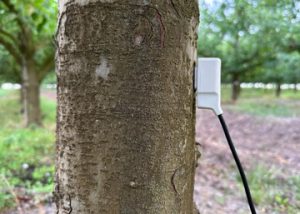
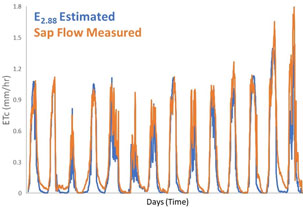
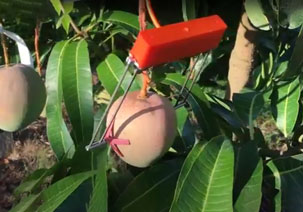
Sap flow techniques allow in situ, continuous monitoring of plant transpiration, providing insights into hydraulic conductance, stomatal behaviour, and water-use strategies. These data underpin mechanistic models of plant function, particularly when integrated with environmental variables such as vapor pressure deficit and radiation. Studies increasingly use sap flow to characterize xylem conductivity loss, capacitance, and seasonal shifts in water transport efficiency, advancing understanding of drought adaptation strategies in diverse plant species. Other applications within plant water use include hydraulic redistribution, nocturnal sap flow, root water uptake, and water demand of organs such as flowers and fruits.
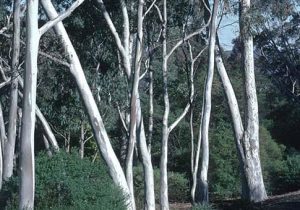
An example application is the tall trees project in California, USA. Dr Anthony Ambrose installed the Implexx Sap Flow Sensor on some of the tallest trees in the world. The aim of the research is to better understand the plant water relations under changing climate and drought conditions of the largest plants on the planet.
Drought Response and Irrigation Management.
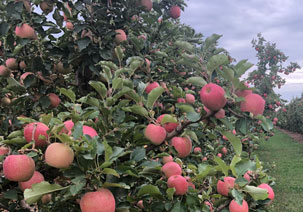
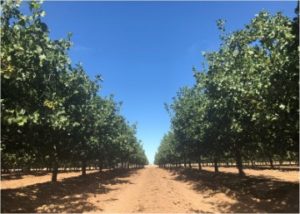
In agriculture and forestry, sap flow data inform irrigation strategies by indicating plant water use and stress levels. This information is vital for optimising water use efficiency, especially under drought conditions exacerbated by climate change. By monitoring sap flow, managers can tailor irrigation schedules to meet plant needs, conserving water resources while maintaining plant health.
Researchers from The University of California, Berkeley, USA, deployed the Implexx Sap Flow Sensors to understand and attempt to predict plant water dynamics during and after water stress: https://onlinelibrary.wiley.com/doi/10.1111/pce.15349
Carbon Cycling, Climate Feedbacks and Eddy Covariance Towers.
Sap flow measurements are crucial for partitioning evapotranspiration in ecosystem carbon-water exchange models. Transpiration, tightly coupled with photosynthetic uptake of CO₂, is a critical process in land-atmosphere carbon dynamics. Sap flow data, particularly when scaled to canopy or stand level, inform Earth system models that simulate biosphere-atmosphere feedbacks under changing climate scenarios.
Such data are also used in eddy covariance cross-validation and phenological modelling. Sap flow sensors are regularly deployed as part of eddy covariance towers and is an active area of research.
Researchers from The University of Basel, Switzerland, used the Implexx Sap Flow Sensors as part of a study to quantify the dynamics of urban carbon dioxide (CO2) emissions and carbon sequestration: https://egusphere.copernicus.org/preprints/2024/egusphere-2024-2475/
Isotope Studies.
Stable isotope analysis, combined with sap flow measurements, enables researchers to trace water sources and pathways within ecosystems. By examining isotopic signatures, scientists can differentiate between water uptake from precipitation versus groundwater, providing insights into plant water use strategies and ecosystem hydrology.
The Implexx Sap Flow Sensor was deployed by researchers from TU Braunschweig, Germany, and University of Arizona, USA, as part of an isotope study. The research was conducted in Costa Rica, as well as at the famous research facility Biosphere 2.
https://www.sciencedirect.com/science/article/pii/S0048969723033867
Hydrology and Groundwater-Dependent Ecosystems.
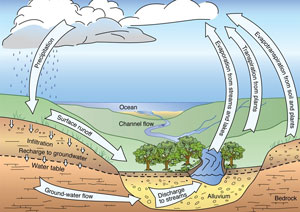
In hydrological studies, sap flow data help assess the reliance of vegetation on groundwater sources. This is particularly important in arid and semi-arid regions where groundwater sustains plant communities during dry periods. Understanding these dynamics aids in managing groundwater resources and conserving dependent ecosystems.
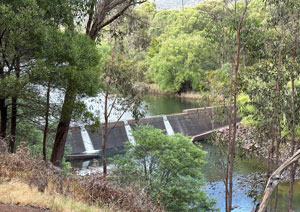
In Australia, many mining companies, including Rio Tinto and BHP, install the Implexx Sap Flow Sensor to monitor trees and ground water dynamics. The Implexx Sap Flow Sensors are an important component of water management at many mine sites.
Phytocaps and Revegetation.
Sap flow monitoring is applied in the evaluation of phytocaps—vegetative covers used in landfill rehabilitation. By measuring transpiration rates, researchers assess the effectiveness of phytocaps in minimizing water infiltration and promoting evapotranspiration. This application supports the design of sustainable waste containment systems and informs revegetation efforts in degraded landscapes.
Researchers from Hong Kong University of Science and Technology installed the Implexx Sap Flow Sensor in tree species targeted for landfill covers, post mining sites, and ecological restoration to better understand plant water dynamics in response to drought: https://sciendo.com/article/10.2478/johh-2023-0038?tab=abstract
Urban Tree Water Use and Green Infrastructure.

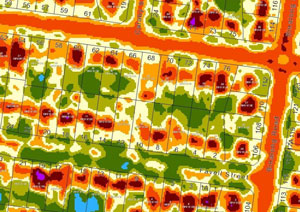
Urban environments present unique challenges to vegetation, including restricted rooting volume, elevated temperatures, and altered hydrology. Sap flow sensors are increasingly used to quantify water use in urban trees to evaluate their cooling potential via transpiration, particularly under heat island conditions. Research in cities such as Melbourne, Singapore, and Phoenix demonstrates how species selection, soil volume, and irrigation practices influence urban tree function. These insights inform urban forestry planning, stormwater management, and heat mitigation strategies by linking tree transpiration to ecosystem service delivery.
The Green Infrastructure Research Labs (GIRLS), located at Griffith University in Queensland, Australia, regularly install the Implexx Sap Flow Sensor to gain a greater understanding of urban tree response to soil water availability and temperature extremes:
https://www.griffith.edu.au/cities-research-institute/research/girls
Disease Detection, Monitoring and Management.
Sap flow sensors can aid in disease detection by identifying abnormal water transport in plants, which may signal vascular blockages caused by pathogens. Early detection enables targeted monitoring and timely management, helping reduce crop losses and improve plant health in forestry, agriculture, and ecological restoration.
Researchers at CREA Council for Agricultural Research and Economics, Italy, deployed the Implexx Sap Flow Sensor to gain insights into Kiwifruit decline syndrome (KiDS) in orchards across Europe: https://www.mdpi.com/2311-7524/10/4/392
Conclusion.
Sap flow measurement is a versatile tool that bridges multiple scientific domains, providing critical data for understanding plant-water relations, managing natural resources, and addressing environmental challenges. Its applications continue to expand, offering valuable insights into the complex interactions between vegetation and the Earth's water and carbon cycles.